
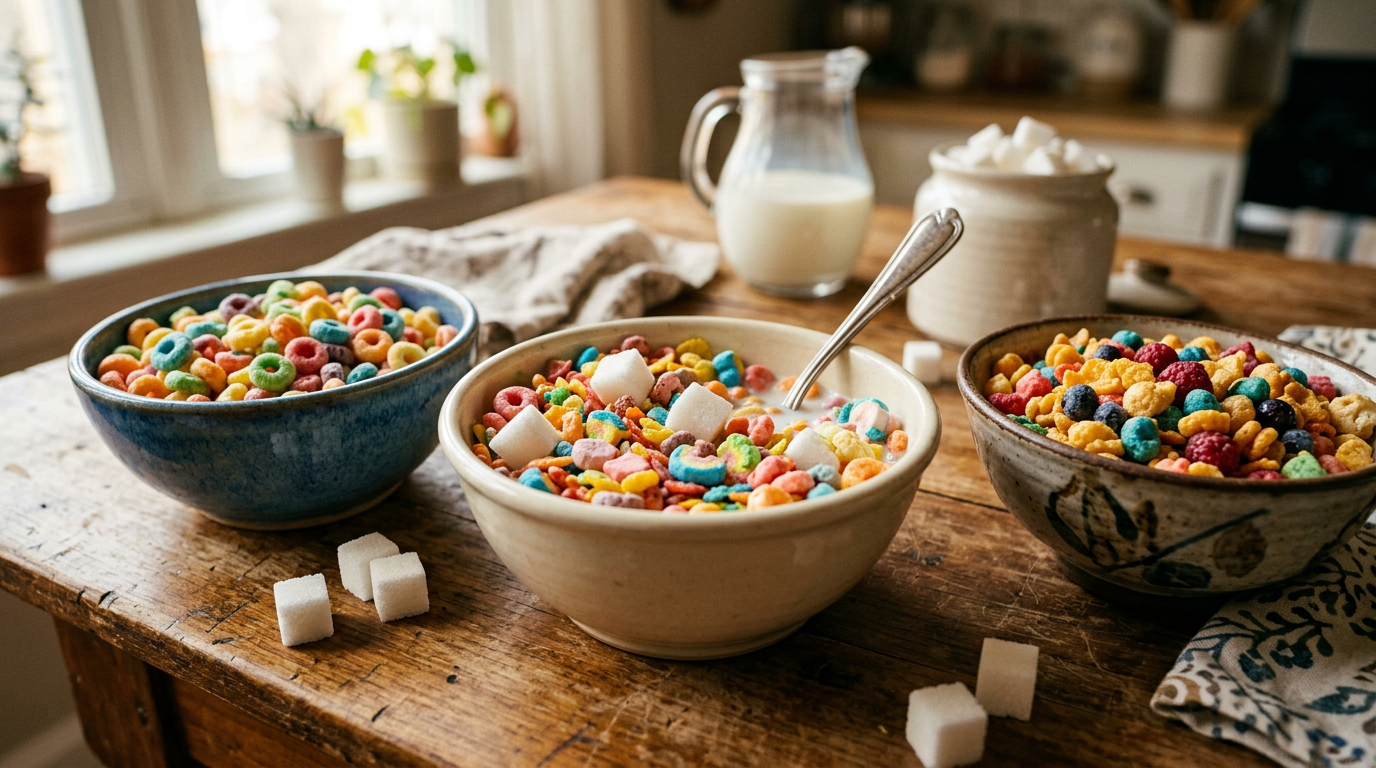
Breakfast cereals are often marketed as a quick, convenient, and healthy way to start the day. However, many cereals are packed with sugar, artificial flavors, and refined grains—sometimes in higher quantities than a standard donut. While the colorful boxes and health claims may be appealing, some cereals can spike blood sugar, contribute to weight gain, and provide little nutritional value. Understanding which cereals are worse than a donut helps consumers make smarter breakfast choices.
Sugary Cereals: Sugar Bombs in Disguise
Many popular children’s cereals, including those with marshmallows or candy pieces, contain more sugar per serving than a typical glazed donut. These cereals can have upwards of 12–14 grams of sugar in a single ¾ cup serving. Consuming them regularly may contribute to insulin spikes, cravings, and long-term metabolic issues. While marketed as fun and energizing, these cereals are essentially sugar in a bowl—often worse than indulging in a single donut.
Highly Processed Flakes: Empty Carbs
Cereals like Frosted Flakes or Cornflakes are heavily processed and stripped of fiber and nutrients during manufacturing. The refined grains cause a rapid increase in blood sugar, much like a donut, but without the protein or fat that can slow digestion and provide satiety. Eating these cereals for breakfast can leave you hungry within an hour, prompting mid-morning snacking and overeating.
Chocolate-Packed Varieties: Dessert for Breakfast
Chocolate-flavored cereals, while tempting, can contain high levels of both sugar and fat, similar to or exceeding that in a donut. Cereals with chocolate pieces, cocoa coating, or chocolate drizzle are effectively dessert disguised as a breakfast food. They contribute empty calories and can negatively affect dental health, especially when consumed frequently.
Cereals with Artificial Ingredients: Hidden Health Risks
Some cereals rely on artificial colors, flavors, and preservatives to appeal to children and adults alike. While these ingredients may not directly add sugar or calories, they can impact digestion and overall health. Artificial dyes, in particular, have been linked to behavioral issues in children and potential long-term health concerns. Combined with high sugar content, these cereals are often nutritionally worse than a donut.
Multigrain Misconceptions: Not Always Better
Even cereals labeled “multigrain” or “whole grain” can contain hidden sugar and refined flour. Many multigrain cereals boast fiber content, but the sugar added for taste often outweighs the health benefits. A donut may actually have fewer ingredients and additives than some of these cereals, making it a more straightforward indulgence in comparison.
Portion Size: The Hidden Danger
A serving of cereal is often listed as ¾ cup or 1 cup, but many people pour much more into their bowls, dramatically increasing sugar, calories, and refined carbs. Pairing it with flavored milk can further amplify the sugar content. In many cases, a bowl of cereal can exceed the sugar in a donut without consumers realizing it.
Conclusion: Read the Labels Before You Pour
Not all breakfast cereals are created equal, and some can be worse for your health than a donut. Sugary cereals, chocolate varieties, highly processed flakes, and even some multigrain options can spike blood sugar, provide little nutritional benefit, and contain additives that aren’t ideal for daily consumption. Reading nutrition labels and opting for high-fiber, low-sugar cereals—or skipping boxed cereals altogether—can help start the day in a healthier way.




Leave a Reply