
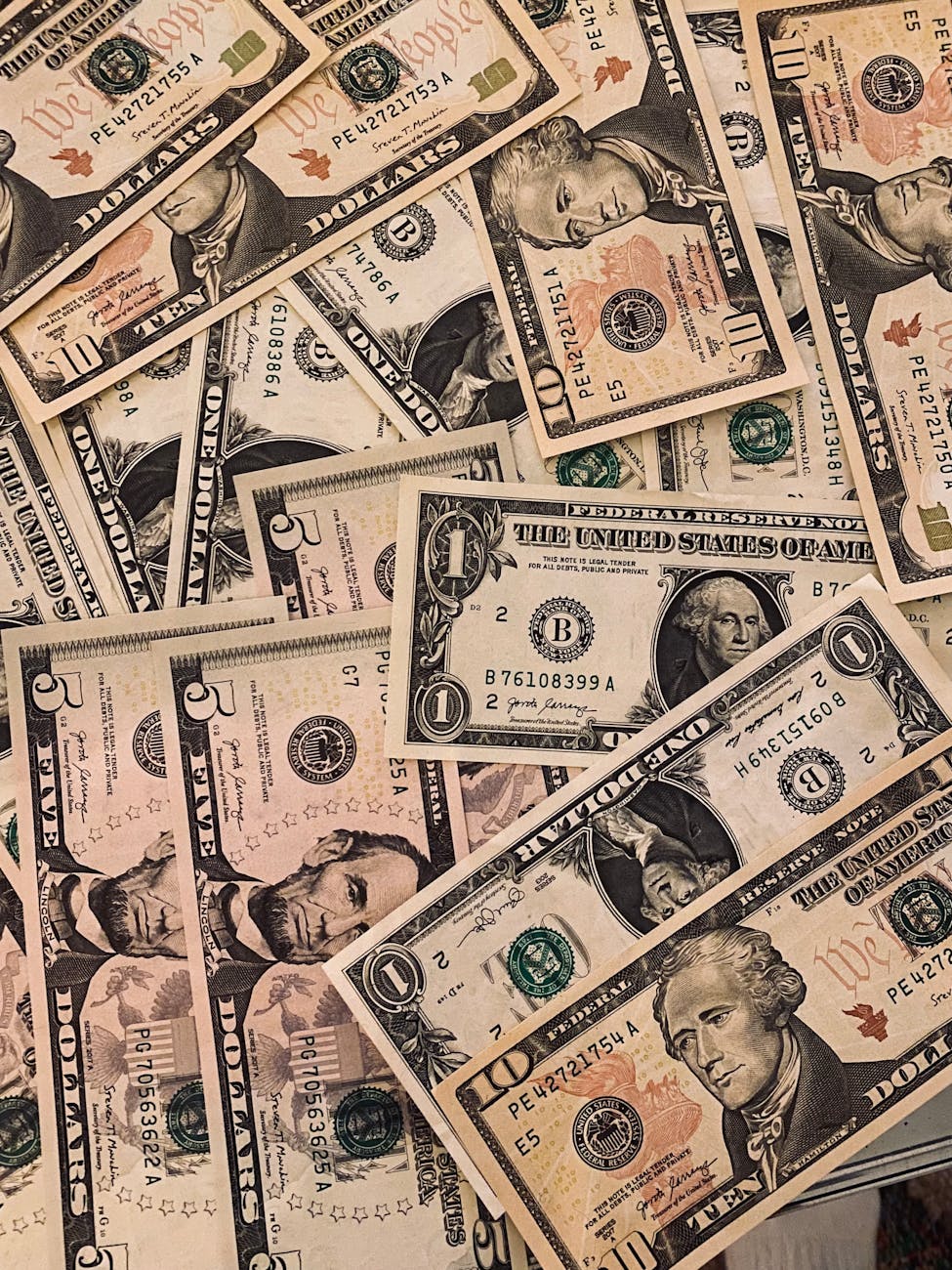
Most people see a $1 bill and think of a small purchase or loose change. But some rare and historic $1 bills are worth thousands—or even hundreds of thousands—of dollars. Whether due to age, printing errors, or unique serial numbers, certain $1 notes have become prized items among collectors. Here are some of the most valuable $1 bills ever known.
1890 $1 Treasury Note (Ornate Back)
One of the most eye-catching and valuable $1 bills is the 1890 Treasury Note, sometimes referred to as the “Ornate Back” note. Its highly detailed reverse design sets it apart from most U.S. currency. Though not as famous as its $1,000 “Grand Watermelon” sibling, this $1 version is still quite rare and can fetch $5,000 to $10,000 in excellent condition.
1869 $1 Legal Tender Note (“Rainbow Note”)
The 1869 $1 “Rainbow Note” is one of the most colorful and collectible pieces of U.S. currency. It earned its nickname from the red, blue, and green inks used in its intricate design. Featuring a portrait of George Washington, this Civil War-era bill in high-grade condition can sell for $3,000 to $15,000 depending on its rarity and paper quality.
1928B $1 Silver Certificate with “Funny Back”
The 1928B Silver Certificate is part of a short-lived design series known for its unusual, decorative back—earning it the nickname “Funny Back”. These notes are valuable because they were only printed for a few years and represent a transitional phase in U.S. currency design. A pristine, uncirculated example can go for $1,000 to $5,000, while lower-grade versions still attract collectors for several hundred dollars.
1935 and 1957 $1 Silver Certificates with Star Notes
Not all valuable $1 bills are over a century old. Some 1935 and 1957 $1 Silver Certificates, still fairly common, become extremely collectible when they have “star notes”—a star symbol replacing the last letter in the serial number. These were printed to replace misprinted bills and were produced in much smaller quantities. Depending on rarity and condition, star note versions can sell for $100 to $1,500 or more.
1988A $1 Federal Reserve Note with Major Error
Modern $1 bills can also be worth big money—if they contain a major printing error. One well-known example is the 1988A $1 bill that had a misaligned seal and serial number, earning the nickname “Offset Printing Error.” Bills like this, especially in crisp condition, have sold for over $5,000 at auction. Even minor errors like inverted serials or ink smears can increase a bill’s value dramatically.
Fancy Serial Numbers
Another factor that can skyrocket the value of a $1 bill is a fancy serial number. Notes with repeating digits (like “77777777”), low numbers (such as “00000001”), or palindromes (like “12344321”) are highly desirable. Collectors have paid hundreds to thousands of dollars for these seemingly ordinary bills with extraordinary numbers.



Leave a Reply