
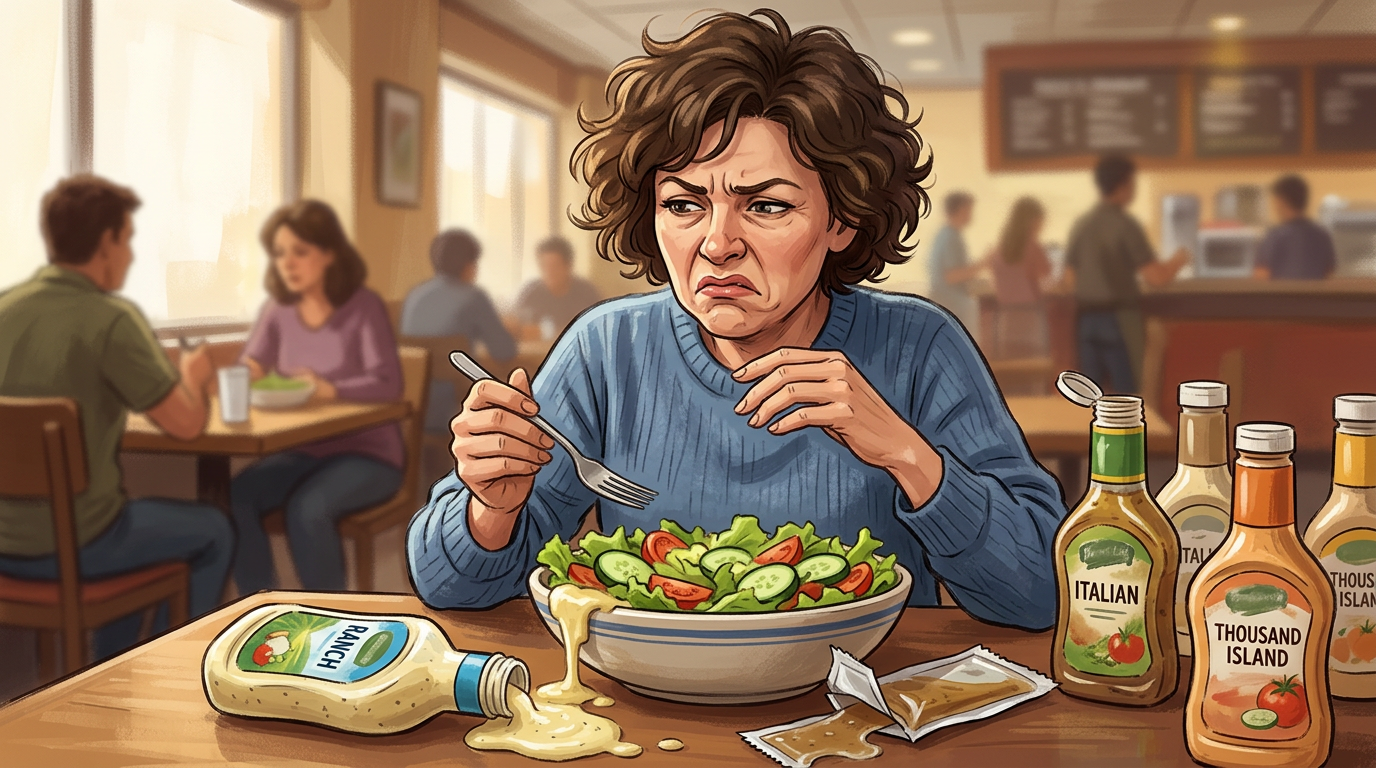
Salad dressing can completely transform a bowl of greens from bland to satisfying. The right dressing adds acidity, creaminess, and flavor balance, while the wrong one can overwhelm ingredients or introduce unnecessary additives.
Many store-bought dressings and restaurant versions prioritize shelf life, cost efficiency, or mass appeal over quality ingredients. Even popular chains like Subway and casual dining spots like Applebee’s often rely on standardized dressings that sacrifice freshness for consistency.
SUGAR-LOADED CREAMY RANCH DRESSINGS
Creamy ranch is one of the most popular salad dressings, but many mass-produced versions are packed with added sugars, artificial flavors, and stabilizers. Instead of a fresh herb-forward profile, they often taste overly processed and heavy.
These versions can overpower salads rather than enhance them, masking the natural flavors of vegetables. The texture is also frequently too thick, leaving a coating rather than a balanced dressing.
A better option is a homemade or refrigerated ranch made with real buttermilk, fresh herbs, and Greek yogurt for a lighter, tangier profile.
ARTIFICIAL HONEY MUSTARD DRESSINGS
Many bottled honey mustard dressings rely on corn syrup, artificial sweeteners, and emulsifiers to mimic natural sweetness and tang. The result is often a cloying, one-dimensional flavor.
Instead of a balanced mustard bite, these dressings can taste overly sugary with very little real mustard depth. This can make salads feel more like desserts than savory meals.
A better alternative is a simple mix of Dijon mustard, real honey, and apple cider vinegar, which creates a fresher and more balanced flavor profile.
HEAVILY PROCESSED ITALIAN DRESSINGS
Store-bought Italian dressings often contain long ingredient lists filled with preservatives, soybean oil, and artificial flavor enhancers. While they aim to deliver a zesty profile, they frequently taste flat or overly acidic.
The oil-to-vinegar ratio can also be inconsistent, leading to separation and uneven coating on salads. This diminishes both texture and taste quality.
A better choice is a simple vinaigrette made with olive oil, red wine vinegar, oregano, garlic, and a pinch of salt.
LOW-FAT BOTTLED DRESSINGS
Low-fat dressings were once marketed as healthier alternatives, but many replace fat with sugar, gums, and artificial thickeners. This often results in an unappealing texture and overly sweet taste.
Without fat, the dressing can feel watery and fail to cling properly to salad ingredients. The flavor is often dull and lacks richness.
Better alternatives include small portions of full-fat dressings made with olive oil or avocado oil, which provide natural flavor and satiety.
GENERIC RESTAURANT HOUSE DRESSINGS
Many restaurant chains use standardized house dressings that prioritize cost control and shelf stability over freshness. These are often pre-mixed and shipped in bulk to locations nationwide.
At restaurants like Olive Garden, house dressings are designed for consistency, but they can sometimes lack the brightness and complexity of freshly made versions.
Common issues with lower-quality dressings include:
- Excessive preservatives
- Artificial flavoring agents
- Overly thick or syrupy texture
- Lack of fresh herb or citrus notes
A better alternative is asking for oil and vinegar on the side or choosing freshly prepared vinaigrettes when available.
CONCLUSION
Not all salad dressings are created equal. Many popular options rely on additives, sugar, and processing shortcuts that reduce both flavor and nutritional value.
Choosing simpler, fresher dressings made with real ingredients can dramatically improve the taste and quality of any salad while supporting healthier eating habits.


Leave a Reply