
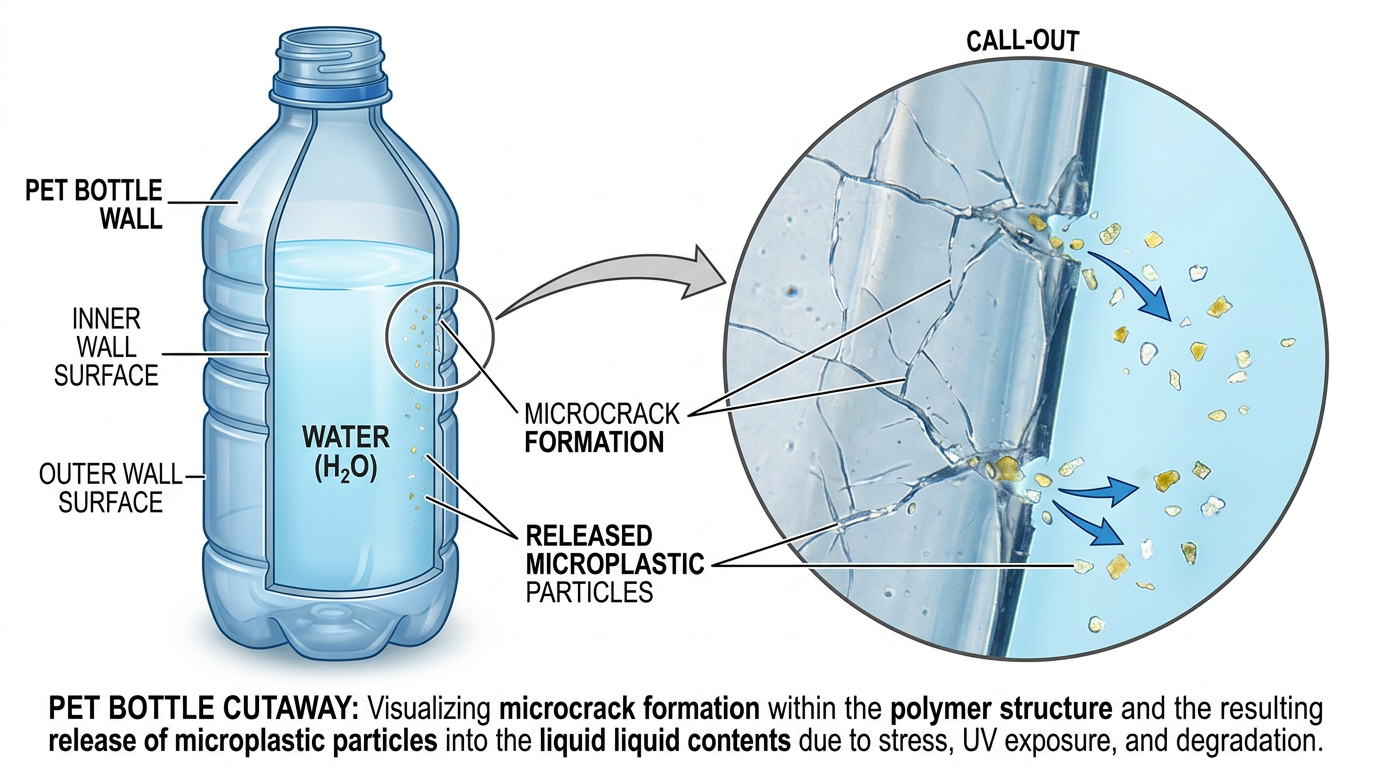
Concerns about bottled water and long-term health often focus less on the water itself and more on how it is packaged, stored, and handled. While no bottled water has been proven to directly cause cancer, certain conditions involving plastic packaging and environmental exposure are frequently studied for potential long-term health implications.
Researchers generally emphasize that risks are not tied to specific brands, but rather to material behavior under heat, time, and reuse conditions. The following sections explore types of bottled water situations and packaging practices that are often discussed in this context.
Plastic Bottled Water Exposed to High Heat
One of the most commonly studied issues is plastic bottled water left in hot environments. Heat can accelerate the breakdown of plastic materials and increase the potential for trace chemical migration into water.
This is especially relevant in cars, warehouses, or outdoor storage areas where temperatures rise significantly. While the health impact at typical exposure levels is still being researched, minimizing heat exposure is widely recommended.
Over time, repeated exposure to high temperatures is considered a poor storage practice for maintaining water quality.
Bottled Water in Low-Grade PET Plastic
Most bottled water uses PET plastic, which is considered safe for single use under normal conditions. However, lower-grade or poorly manufactured PET containers may degrade more quickly over time.
This degradation can increase the release of microplastics, which are currently being studied for potential long-term biological effects. The science is still developing, and no direct cancer link has been confirmed.
Still, packaging quality is an important factor in long-term consumption safety discussions.
Bottled Water Stored Beyond Recommended Timeframes
Although bottled water does not spoil in the traditional sense, manufacturers often include “best by” dates to indicate optimal quality. Over extended periods, plastic packaging may gradually lose stability.
This can lead to minor changes in taste and potential increases in material breakdown, especially if storage conditions are not ideal. Heat, light, and time all play a role in packaging degradation.
While not a direct health hazard, it is considered a quality and safety maintenance concern.
Bottled Water Left in Sunlight or Fluorescent Light
Bottles stored under direct sunlight or strong lighting for long periods may experience faster plastic aging. UV exposure can weaken packaging materials over time.
This is why retail storage conditions matter, as improperly displayed bottled water may be exposed to light and heat simultaneously. These factors can contribute to gradual breakdown of container integrity.
Choosing bottles stored in shaded, temperature-controlled environments is generally considered a safer practice.
Thin or Budget Plastic Bottles
Some bottled water brands use thinner plastic containers to reduce costs and improve portability. While still meeting safety standards, these bottles may be more vulnerable to physical stress and temperature changes.
- Thinner plastic can degrade faster under heat
- Increased flexibility may lead to micro-scratching over time
- Long storage periods can amplify material wear
These factors are related to packaging durability rather than confirmed disease risk, but they are still relevant in safety discussions.
Reusing Single-Use Bottles Multiple Times
Reusing disposable plastic bottles is common, but it is not recommended for long-term use. Repeated washing, squeezing, and refilling can wear down the plastic surface.
This wear may increase the likelihood of microplastic shedding over time. For repeated use, purpose-built reusable containers such as stainless steel or glass are generally preferred.
Conclusion
There is no scientific evidence linking specific bottled water products to cancer. However, packaging materials, storage conditions, and reuse habits can influence water quality and long-term exposure to plastic-related compounds. Choosing proper storage methods and durable reusable containers is a more effective way to reduce unnecessary risks.



Leave a Reply